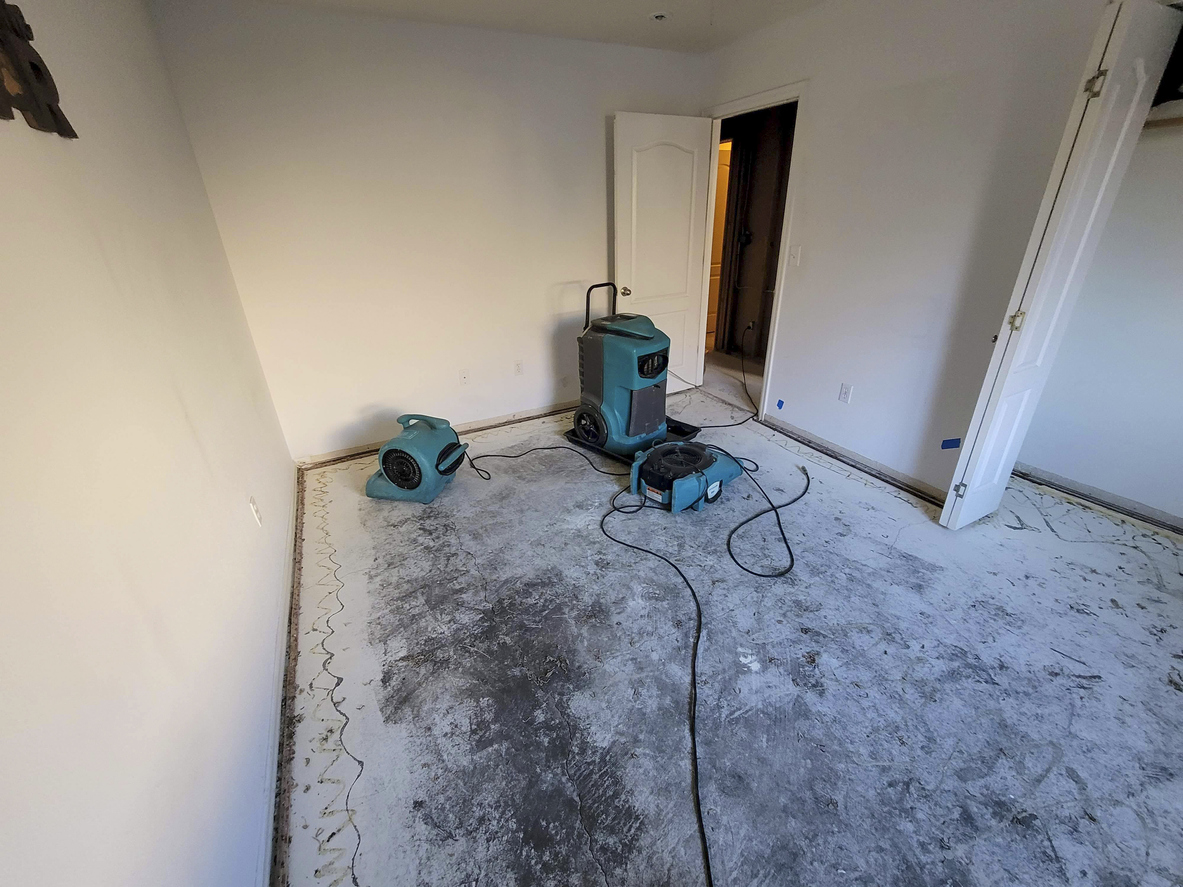
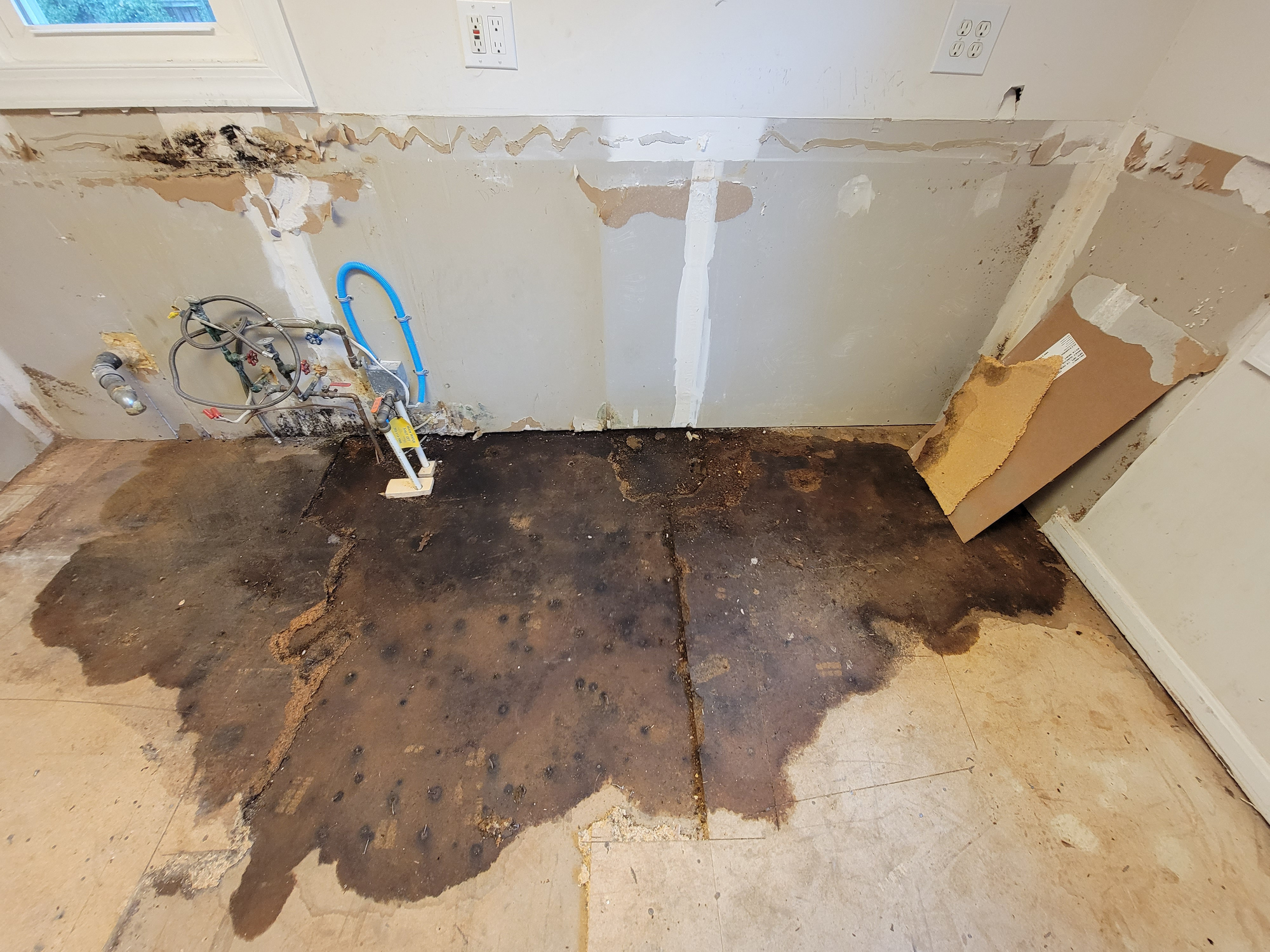
Water damage is sneaky. By the time you notice a stain on the ceiling or a soft spot in the floor, the problem has usually been building for weeks or months. The average homeowner does not discover hidden water damage until it becomes a repair that costs thousands of dollars more than it would have caught early.
These are the seven signs our crews see most often when they arrive at a property. If you recognize more than one or two, do not wait.
1 Stains or Discoloration on Walls and Ceilings
Yellow, brown, or copper-colored stains on drywall or ceiling tiles are almost always caused by water. The stain itself might be dry by the time you see it, which leads many homeowners to assume the problem is gone. It is not. The stain marks where water traveled and stopped — the source is usually above or behind it.
Pay particular attention to stains that grow over time, stains near plumbing fixtures, and any discoloration that returns after you paint over it.
2 Warped, Buckled, or Soft Flooring
Wood floors that cup, buckle, or feel spongy underfoot have absorbed moisture. This happens when water gets under the flooring from a leak above or below. Tiles that crack or pop loose can signal the same thing in a subfloor that has swelled and shifted.
Soft spots in carpet — especially near walls, under windows, or near appliances — are worth investigating. What feels like a minor padding issue is often a subfloor that has been wet for some time.
3 Musty or Damp Odor With No Obvious Source
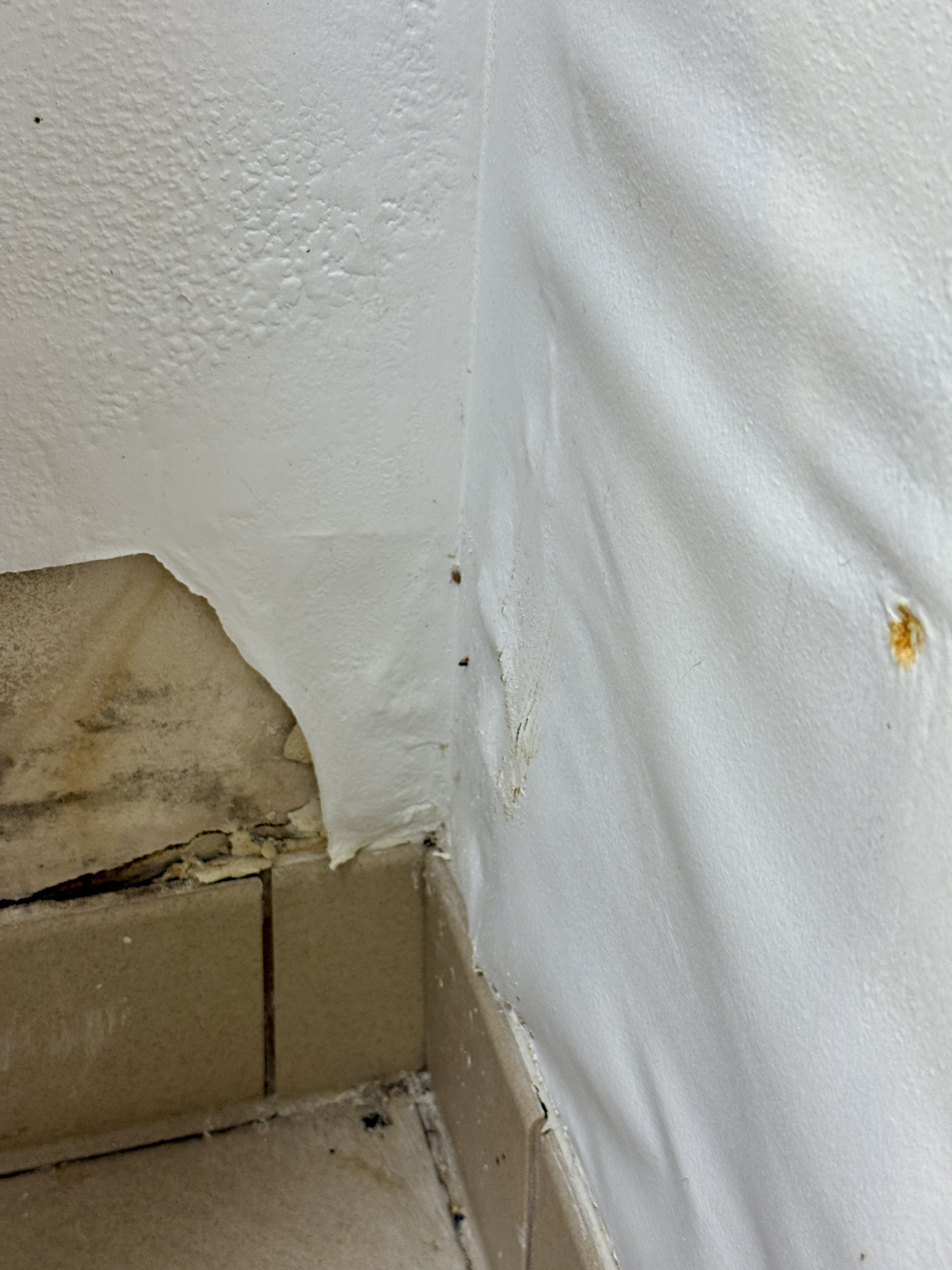
A persistent musty smell that does not go away after cleaning is one of the clearest indicators of hidden moisture. Mold produces that odor as it grows, and it can start growing within 24 to 48 hours of water exposure. If you can smell it, mold is likely already present somewhere in the structure.
Common culprits include inside cabinets under sinks, behind washing machines, in crawl spaces, and inside wall cavities near windows or exterior walls.
Noticing a musty smell you cannot locate?
Our team uses moisture meters and thermal imaging to find water behind walls and under floors.
4 Peeling Paint or Bubbling Wallpaper
Paint and wallpaper adhere to dry surfaces. When moisture works its way through drywall from behind, it breaks that bond. Bubbling, peeling, or paint that flakes off in sheets — especially on exterior-facing walls or in bathrooms — usually means water is in the wall.
This is often dismissed as an old paint job or humidity. Occasionally it is. But if the same area keeps peeling after repainting, there is moisture behind it that has not been resolved.
5 Mold Growth in Unexpected Places
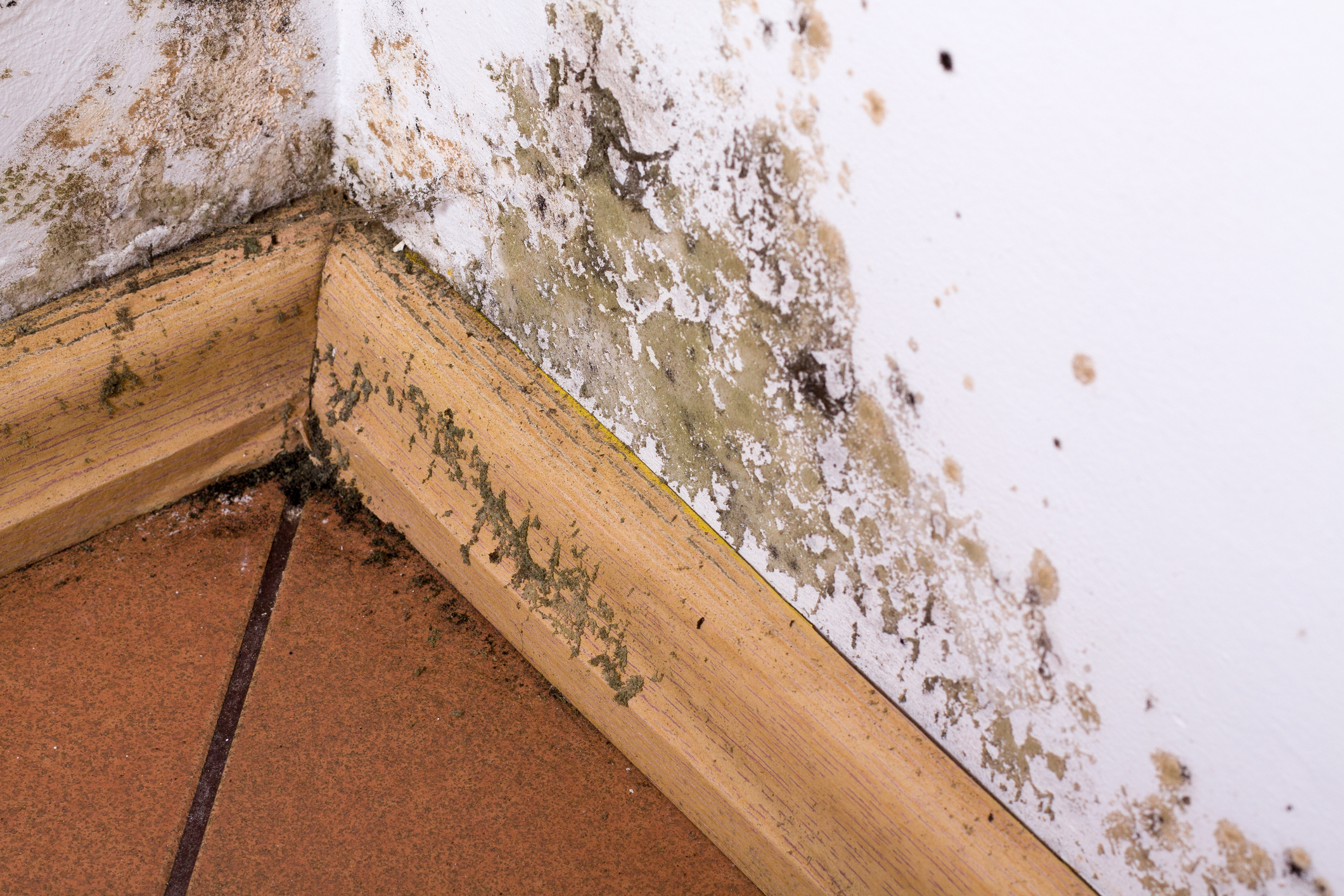
Small clusters of mold in grout lines or around a showerhead are common and manageable. Mold growing on baseboards in a bedroom, inside a closet, or on the ceiling of a room that is not a bathroom is a different situation entirely.
Mold in unusual locations almost always means there is a moisture source that should not be there — a slow plumbing leak, condensation from an HVAC issue, or water intrusion through the foundation or roof.
6 Higher Water Bills With No Explanation
A slow leak inside your walls or under your slab does not announce itself. But your water meter notices. If your usage has gone up without a change in habits — no new appliances, no additional people in the home, no obvious change — a hidden leak is one of the first things to investigate.
Turn off every water source in your home, then check if your meter is still moving. If it is, you have an active leak somewhere in the system.
7 Foundation Cracks or Rust Stains Near the Base of Walls
Rust stains along baseboards or at the base of walls often come from metal fasteners or pipes that have been exposed to moisture over time. In a basement or crawl space, rust and efflorescence — a white chalky mineral deposit — on block or concrete walls signals ongoing water infiltration from outside.
Cracks in a foundation that widen over time or appear damp can allow ground water to seep in. This is one of the more serious signs on this list because foundation water damage compounds quickly and is expensive to remediate.
What to Do If You Recognize These Signs
Do not wait for the problem to make itself obvious. By the time water damage is visible, the structural materials behind it have usually been compromised for some time. Mold may already be growing. The longer it sits, the more material needs to be removed and replaced.
The right move is a professional moisture inspection. Our crews use non-invasive moisture meters and thermal imaging to find the source without tearing into walls unnecessarily. Most inspections take less than an hour and give you a clear picture of what is happening and what it will take to fix it.
Dealing With Water Damage Right Now?
Our team responds fast. Call us or request an estimate and we will be in touch quickly.
(844) 747-2110 Get Free Estimate →No obligation. Crews available 24 hours a day.